> EU Kids Act Won't Keep the Internet Accountable and Trustworthy
[AUTHOR: Christoph Schmon]
[DATE: 21/09/2026 12:27]
[LANGUAGE: EN]
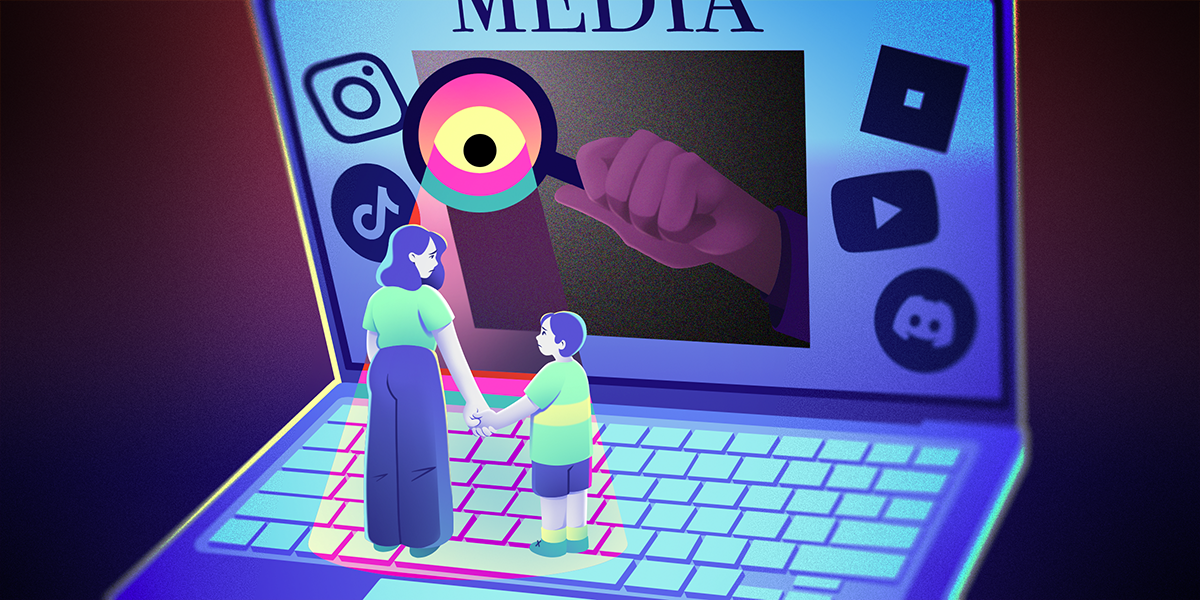
The EU Commission draft law to restrict young people’s access to the internet that it presented last week will come at a high cost: it will make internet access contingent on age, expand the use of intrusive age verification, and undermine the privacy of all users.
The EU Kids Act aims to protect children from risks associated with social media, video games, and AI systems by introducing age-based access rules, safety requirements, and stronger enforcement and oversight measures. It presents itself as building on the Digital Services Act (DSA) and puts into “hard law” some of the safety-by-design measures specified in the non-binding DSA guidelines on minors’ protection.
The proposal is built around the following elements: social media age “delay”, safety by design, age assurance and parental responsibility, and strong enforcement. Each of these measures are concerning.
Mandatory Age Gates for Social Media and Video-Sharing Platforms
Following the advice of an expert panel, the proposal would create a phased access to social media and video-sharing platforms deemed risky—a threshold met simply by relying on personalized recommender systems or offering “uninterrupted content consumption”: no service accounts for children under 13; restricted accounts under tight parental supervision from 13 to 15; and autonomous accounts in a safe-by-design environment from 15 to 18. Full online access is therefore reserved for adults.
However they’re designed, age gates undermine civil liberties, reduce safety, and create barriers to internet entry, often at the expense of marginalized groups.
If this sounds complex and like a compliance nightmare, that’s because it is. The access delay comes with privacy-intrusive age verification across the board, relying on the EU age verification scheme. For teenagers, this law means significant control in the hands of their parents, who must set up accounts and prove that they are, in fact, parents, adding yet another problematic layer of verification.
In fairness, the Kids Act’s gradual approach at least appears to be designed with some proportionality considerations, rather than imposing a blanket social media ban. Just last month a French court declared such undifferentiated bans unconstitutional. The EU Kids Act distinguishes between age groups and certain services and follows a risk-based approach. This means, for example, that age verification is not required for existing accounts if the provider can tell with a “high degree of confidence” that the user is above the age threshold—a vaguely specified standard.
Yet, the law still indiscriminately covers social media and video-sharing, with virtually all mainstream services being covered by the proposal. The broad scope also sits uneasy with the use of age thresholds, which remain a blunt proxy for maturity. What is more, by focusing heavily on safety and harms, the EU Kids Act pays little attention to the privacy and freedom of expression rights of users, as well as the right of children themselves to access information and to participate online. However they’re designed, age gates undermine civil liberties, reduce safety, and create barriers to internet entry, often at the expense of marginalized groups. They also create a powerful infrastructure for control and further entrench the power of big tech.
The proposal exempts not-for-profit encyclopedias, scientific repositories and educational services, as well as open-source software-developing and-sharing platforms. However, no exceptions are foreseen for small and medium-sized enterprises, which will only foster the dominance of resource-laden tech companies that were already investing in similar measures. And we know that most companies are well-advised to play it safe and use privacy-unfriendly age checks across their platforms.
Safety by Design Across Covered Services
The proposal’s second pillar, “safety by design”, casts a wider net. It applies across social media, video-sharing, online games, AI companions, chatbots and even app stores—with varying requirements. Providers must generally make child-safe design the default and can relax from the requirements only if they use age assurance to establish that the user is an adult.
For example, rules on addictive features such as infinite scrolling, safe account settings, and more choice over recommender systems are to provide a safe internet experience to young people. As regards AI companions and chatbots, the proposal requires companies to design their services to reduce minors’ exposure to emotional dependencies and harmful interactions. Online games are covered as well: they must come with contact protections. The law also makes app stores the gate keeper for age-appropriate access, based on an age-rating system.
The devil of these measures lies in the details, but all of them raise fundamental rights concerns and some of them seem poorly suited, if at all, to the decentralized architecture of the Fediverse. The requirement for very large online platforms to set up compliance plans before rolling out new services raises additional questions about the risks of transplanting product-safety doctrines of conformity and risk control into speech regulation. Deciding what is “safe” can easily become a question of what content people can access or share.
Next Steps
By choosing to regulate all these aspects through the Kids Act, the Commission not only but creates a privacy minefield, it also intermingles the digital fairness agenda with the more fundamental-rights heavy questions of age assurance and access to information. An unfortunate policy choice that will politicize well-intentioned efforts to curb manipulative and addictive design practices (read our position on the DFA).
It speaks volume that the Kids Act has not gone through a full impact assessment process, which would typically require a systemic check of alternative policy options and stakeholder consultations. Looking forward, we call on the EU lawmakers to pull the teeth of the most harmful suggestions and to make sure that the new measures don’t erode the fundamental rights of all users.